

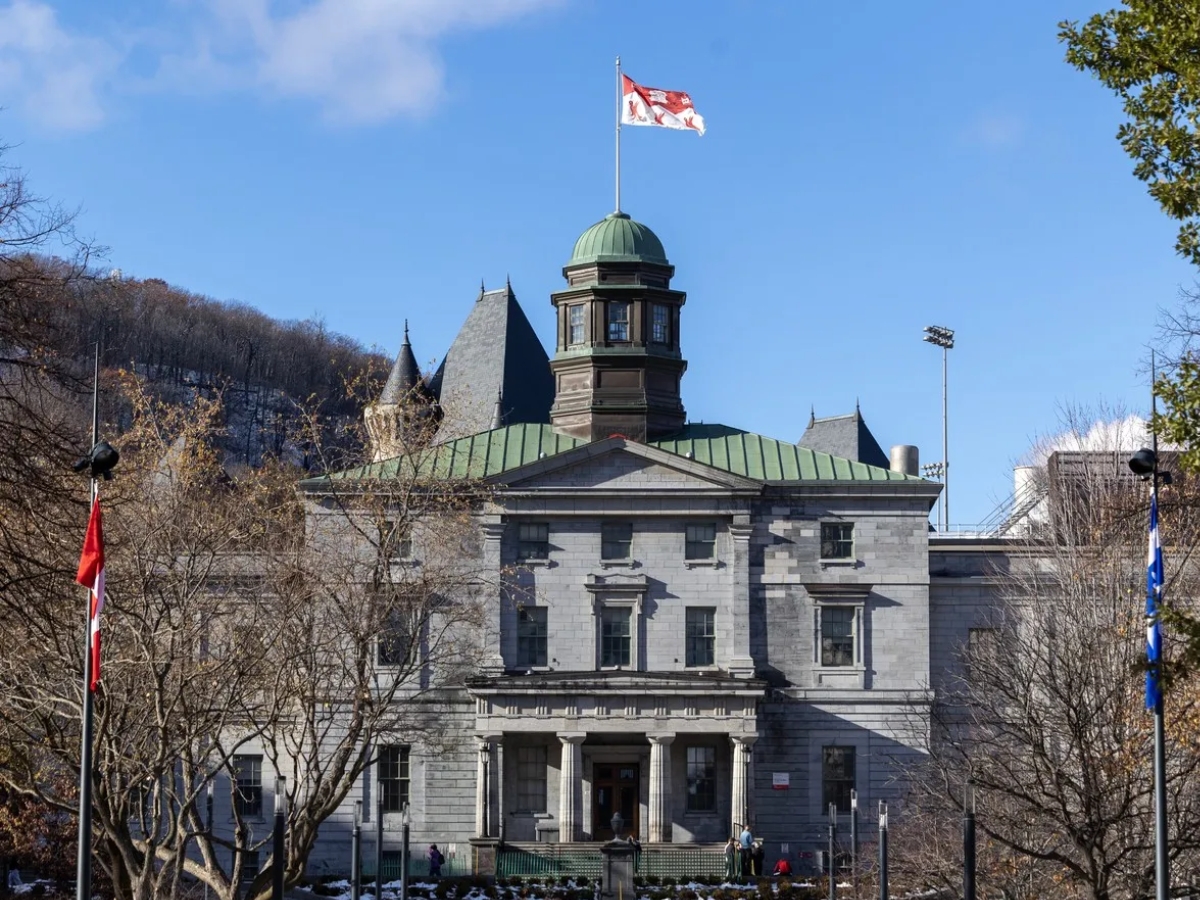
On March 27, 2026, CJPME issued a letter to McGill President Deep Saini defending law students who adopted a referendum question on the academic boycott of Israel.
Dear President Saini,
I am writing on behalf of Canadians for Justice and Peace in the Middle East (CJPME) to express grave concern over your rejection of the Law Students’ Association’s (LSA) Referendum Regarding the Academic and Cultural Boycott of Israel to Preserve Academic Freedom.[i] Your administration’s mischaracterization of this student-led democratic process as "discriminatory," "antisemitic," and “invalid,” along with your threat to place the LSA in default of its memorandum of agreement, is a heavy-handed attempt to suppress political expression concerning Palestinian human rights.
The legitimacy of academic boycotts
Inspired by the academic boycotts against apartheid South Africa in the 1970s–80s, the movement for Boycott, Divestment, and Sanctions (BDS) is the response to an invitation from Palestinian civil society to take up non-violent forms of pressure against Israel to force it to comply with international law.[ii] It is a global movement that urges governments, businesses, and academic institutions to divest from companies and institutions that are complicit in Israel’s apartheid policies, the illegal occupation of Palestine, and war crimes and genocide in Gaza. BDS is a nonviolent method of holding Israel to account for its unjust treatment of Palestinians.
Your claim that a BDS referendum is “discriminatory” is false, and is not shared by notable academic associations including the Middle East Studies Association (MESA),[iii] the American Studies Association,[iv] the British Committee for the Universities of Palestine (BRICUP),[v] nor the Academic Advisory Council of Jewish Voice for Peace.[vi] In Canada, the Canadian Association of University Teachers (CAUT) declared that it “fully stands behind the 18 Faculty associations that have passed motions calling for boycott and/or divestment and/or sanctions of the State of Israel.”[vii]
Moreover, it is necessary to examine the issue of academic freedom in a context of apartheid and illegal occupation. Israeli universities are actively involved in military research and weapons systems used by the Israeli military and are complicit in discriminatory policies that severely restrict Palestinian scholars’ and students’ freedoms.[viii] Further, academics, UN experts, and the international human rights community have documented how Israel is committing “scholasticide” — defined as “the systemic obliteration of education through the arrest, detention or killing of teachers, students and staff, and the destruction of educational infrastructure” — in Gaza.[ix]
When universities, students, and academic bodies hold Israel and its universities to account for their role in human rights violations, this is an affirmation of the very values that underlie academic freedom, not an attack on it. Paradoxically, your statement creates a double standard, in which boycotts that support Palestinian human rights are treated as uniquely discriminatory. For example, in 2022, McGill University ended its memorandum of understanding with a Russian academic institution for its invasion of Ukraine.[x] This poses the question of why the same measures are suddenly not appropriate when it comes to Israel and illustrates that standards for acceptable boycotts are applied unevenly by McGill.
Further, the referendum cites the Palestinian Campaign for the Academic and Cultural Boycott of Israel (PACBI), whose ethics guidelines state:[xi]
Anchored in precepts of international law and universal human rights, the BDS movement, including PACBI, rejects on principle boycotts of individuals based on their identity (such as citizenship, race, gender, or religion) or opinion. If, however, an individual is representing the state of Israel or a complicit Israeli institution (such as a dean, rector, or president), or is commissioned/recruited to participate in Israel’s efforts to “rebrand” itself, then her/his activities are subject to the institutional boycott the BDS movement is calling for. Mere affiliation of Israeli scholars to an Israeli academic institution is therefore not grounds for applying the boycott.
By citing its adherence to the PACBI guidelines the LSA’s referendum was designed explicitly to avoid discrimination or harassment based on identity, instead targeting those who represent the state of Israel or a complicit institution.
The legitimacy of student democracy
The policy in question was adopted by a majority of law students with 57.3% support, in a referendum with a turnout of 67%. This is a clear democratic mandate. By mischaracterizing this result as “invalid” and threatening to terminate the agreement with the LSA – which would affect its status and access to campus resources – your administration is engaging in an attack on student democracy. This amounts to the suppression of a legitimate democratic outcome on the basis of its political content, contributing to an ongoing crackdown on pro-Palestinian advocacy in which student expression on Palestinian human rights is systematically silenced and wrongly conflated with antisemitism.
Recommendations
Academic institutions must uphold the principles of free speech and academic freedom, but McGill’s latest actions undermine both. CJPME insists that the administration should retract its threats against the LSA, and apologize for its misleading and defamatory characterization of the referendum.
Instead, we urge McGill to respond to student demands by respecting the academic boycott of Israel and ending all institutional partnerships and bilateral academic agreements with Israeli universities complicit in human rights violations.
McGill’s reputation as a progressive and inclusive institution is at serious risk. We expect your administration to respond with the urgency and accountability it warrants.
I look forward to hearing from you regarding this urgent matter.
Sincerely,
Michael Bueckert, PhD
Vice President
Canadians for Justice and Peace in the Middle East
[i] Law Students’ Association of McGill University, "Referendum Regarding the Academic and Cultural Boycott of Israel to Preserve Academic Freedom" (2026).
[ii] “Palestinian Civil Society Call for BDS,” July 9, 2005, https://bdsmovement.net/call
[iii] Middle East Studies Association, “Regarding BDS (2022),” https://mesana.org/about/resolutions.
[iv] American Students Association, “Boycott of Israeli Academic Institutions,” December 4, 2013, https://www.theasa.net/about/advocacy/resolutions-actions/resolutions/boycott-israeli-academic-institutions.
[v] British Committee for the Universities of Palestine (BRICUP), “Why Boycott
Israeli Universities?” April 2007, https://d33hbjhijwmfsk.cloudfront.net/uploads/2022/12/BRICUP-booklet.pdf.
[vi] Jewish Voice for Peace, “Stifling Dissent,” Fall 2015,%20https:/www.jewishvoiceforpeace.org/wp-content/uploads/2015/09/JVP_Stifling_Dissent_Full_Report_Key_90745869.pdf.
[vii] Agenda item 12-E, CAUT Council Meeting, November 29-30, 2024 https://x.com/CJPME/status/1864786868396605507/photo/2
[viii] Right2Edu, “The academic boycott of Israel explained,” 2014, https://right2edu.birzeit.edu/israeli-academic-institutions-are-complicit-thats-why-we-should-boycott-them-2/.
[ix] United Nations, “UN experts deeply concerned over ‘scholasticide’ in Gaza,” April 18, 2024, https://www.ohchr.org/en/press-releases/2024/04/un-experts-deeply-concerned-over-scholasticide-gaza
[x] University Affairs, “Russia’s war on Ukraine shakes academia,” April 26, 2022, https://universityaffairs.ca/news/russias-war-on-ukraine-shakes-academia/#:~:text=Russians%20withdrew%20by%20droves%20from,to%20consider%20changing%20its%20name.
[xi] PACBI Guidelines for the International Academic Boycott of Israel, https://www.bdsmovement.net/pacbi/academic-boycott-guidelines